Tuesday, August 7, 2012

Johnny Winter Exclusive Interview: "Rock ‘N’ Roll Was A Disguise; I Really Wanted To Play The Blues"


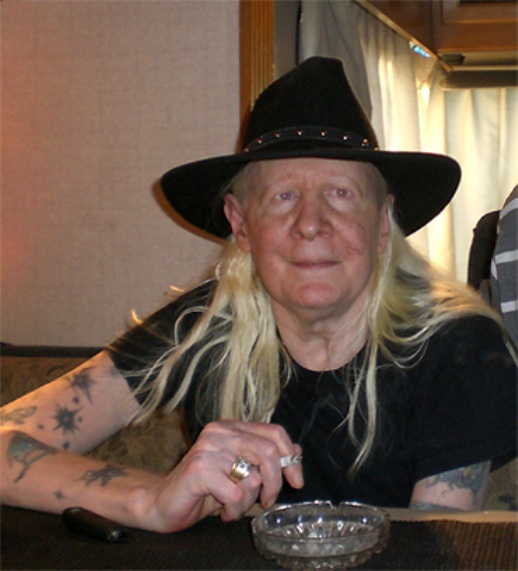
Photo by Steve Hefter
By Ray Shasho

Johnny Winter proclaimed in a recent interview with Classic Rock Music Examiner Ray Shasho, that playing rock and roll was basically a front to appease audiences. His heart was saying no to rock and roll while his soul was saying yes to the blues. Winter abandoned rock ‘n’ roll to resurrect the blues.

Johnny Winter is acknowledged worldwide as a legendary blues artist, but he also holds the title of American rock ‘n’ roll hero. Winter wore both hats equivalently on stage. Only Johnny Winter could scream ROCK ‘N’ ROLL! …. a battle cry to a generation of rebellion youths in front of sold-out arenas and stadiums, with his kind of intensity and emotional reverberation. No other audience could reciprocate to those words more passionately than at a Johnny Winter concert. And who more revered than Johnny Winter (except for the man himself) could follow up his ROCK ‘N’ ROLL battle cry with perhaps one of the greatest rock ‘n’ roll songs in history, “Johnny B. Goode.”

Johnny Winter was born and raised in Beaumont, Texas. In 1969, Winter signed with Columbia Records in one of the largest solo deals of the time. Winter was enticed to join his first band after listening to local deejay J.P. Richardson (The Big Bopper of “Chantilly Lace fame”) spinning 50s rock ‘n’ roll music over the airwaves. But it was the blues that would become his essence, and his admiration for legendary American blues artists like Robert Johnson, Elmore James, John Lee Hooker and Muddy Waters to name just a few.
Winters first album was entitled, The Progressive Blues Experiment originally issued by Austin’s Sonobeat Records in 1968, and rereleased by Columbia Records in 1969. Winter’s self-titled second album with Columbia was also released that year, the album included covers by Robert Johnson, Sonny Boy Williamson, Lightnin’ Hopkins and B.B. King. Winter’s successful debut album set the stage for an appearance at the famed Woodstock Festival in New York. Winter was not included in the Woodstock movie or initial soundtrack because of contractual issues between Steve Paul (Johnny’s former manager) and festival organizers.

Johnny Winter’s next album, Second Winter, featured some of his predominant concert setlist material, Chuck Berry’s “Johnny B. Goode,” and Bob Dylan’s “Highway 61 Revisited.” In 1970 Winter formed a new band featuring several members of The McCoys (“Hang On Sloopy”) including legendary guitarist and songwriter Rick Derringer. Steve Paul was also The McCoys manager and responsible for bringing them together. The band released, Live Johnny Winter And spotlighting Derringer’s penned, “Rock and Roll, Hoochie Koo.” It was during this time that Winter fell under the spell of Heroin addiction.

In 1973, Johnny Winter returned to the music scene with his fifth studio album, Still Alive and Well followed by Saints and Sinners (1974) and Captured Live (1976).

In 1977, Chess Records, long-time record label for legendary blues guitarist and vocalist Muddy Waters, dissolved. Johnny Winter revitalized Waters by inviting him into the studio to record what would be recognized as Muddy Waters comeback album. Winter produced and played on the Chicago-style electric blues album entitled, Hard Again. It was Muddy Waters first album released on Blue Sky Records, a label created by Steve Paul for Columbia. The album won a Grammy Award for Best Ethnic or Traditional Folk Recording.

Johnny Winter continued to produce and play on several studio albums and a best-selling Live album with his good friend Muddy Waters … I’m Ready (1978), Muddy “Mississippi” Waters Live (1979) and King Bee (1981) Waters final release. Two of those albums won Grammy Awards. The string of Johnny Winter albums initiated for Muddy Waters produced the most lucrative period in the career of the legendary bluesman. Muddy Waters died in 1983.

Since 1984, Johnny Winter focused solely on blues oriented-material in the recording studio.
Most recently, Winter headlined the New Orleans Jazz & Heritage Festival, Chicago Blues Festival, Warren Haynes Christmas Jam, Swedish Rock Fest and Europe’s Rockplast. Winter performed with The Allman Brothers Band at the Beacon Theater for their 40th Anniversary of the bands inception. He’s also performed at the 2007 and 2010 Crossroads Guitar Festivals.
In 2008, The Gibson Guitar Company released the Johnny Winter signature Firebird guitar in a ceremony presented by Slash (Guns N’ Roses guitarist) in Nashville.
Johnny Winter continues to earn the title of one the hardest working performers in the music business by consistently touring worldwide. His latest release is befittingly entitled “Roots.” It’s the heyday of Winter with back to basics blues. I give it (5) stars. The album features compositions by some of Johnny’s favorite blues artists and includes guest performances by … Vince Gill, Warren Haynes, John Popper, Derek Trucks and Susan Tedeschi, selected by Johnny’s producer/manager and guitarist Paul Nelson.

Producer Paul Nelson told me that this may be the first in a series of Johnny Winter traditional blues CD’s featuring incredible guest artists.
Johnny Winter’s latest tour kicked off in late July and ends in Paris April 2013. The tour is billed as the ‘Rock ‘N’ Blues Fest’ and ‘Hippiefest’ depending on the city. The concert headlines Johnny Winter, Edgar Winter, Rick Derringer, Leslie West (Mountain) and Kim Simmonds (Savoy Brown). Hippiefest arrives at Ruth Eckerd Hall in Clearwater, Fl on Saturday, August 25th at 7p.m. Purchase tickets at www.rutheckerdhall.com

The Johnny Winter band is: Johnny Winter (guitar and vocals), Paul Nelson (guitar), Scott Spray (bass), and Vito Liuzzi (drums).

I had the rare opportunity to chat with Johnny Winter and his producer/manager Paul Nelson on Wednesday. We talked about “Roots,” the upcoming tour, Johnny’s lifesaving rehabilitation from prescription drugs, a healthier Johnny, and the future of the blues.
Here’s my interview with legendary blues & rock ‘n’ roll guitarist/ singer/ songwriter/ JOHNNY WINTER and Johnny’s manager/producer/guitarist/songwriter/Paul Nelson.
Ray Shasho: Greetings from Florida … thank you both for being on the call today.
Johnny’s manager, producer, guitarist Paul Nelson: “Our pleasure Ray … we’re going to be down in Florida pretty soon with the Rock ‘N’ Blues Fest.”
Ray Shasho: We’re actually calling the show Hippiefest in Clearwater.
Johnny’s manager, producer, guitarist Paul Nelson: “I guess Hippiefest is an occurrence that happens every year, but I don’t think anybody really wanted to be called a Hippie, so somebody decided to change the name to Rock ‘N’ Blues Fest.”
Ray Shasho: Paul, the latest release, “Roots” is just that … back to the heyday of Johnny Winter. It’s a great album … the Blues needed this album.
Johnny’s manager, producer, guitarist Paul Nelson: “Thank you, that’s what I was trying to achieve for him as a producer and it was an honor for me to get that job. But there is resurgence, maybe not a huge resurgence, but certainly an appreciation for it. To bring these songs back and be part of Johnny’s comeback with all those guest artists contributing, and Johnny contributing what made him tick … it was a great thing.”
“Now we’re going to do Roots 2 … this could be an ongoing series, it’s is a serious deal.”
Ray Shasho: Have you thought about the guest lineup of artists for Roots 2 yet?
Johnny’s manager, producer, guitarist Paul Nelson: “Eric Johnson couldn’t make it for the last one so he’s definitely on the list, Billy Gibbons said yes; working on Eric Clapton, Dr. John couldn’t make it because he was in the studio, Gregg Allman was in the hospital at the time, we’ve got Mark Kopfler working on “Okey Dokey Stomp.” Nobody is saying no …so that’s great.”
Ray Shasho: I know an incredible guitarist up in Montreal who would probably love to play on it, by the name of Frank Marino.
Johnny’s manager, producer, guitarist Paul Nelson: “We just talked about that the other day, we’d love to have him on it, and we’re actually working on that. You’re the second or third person who has mentioned Frank, and it just makes sense because he’s a huge Johnny fan. I was a big fan of Frank’s as a guitar player myself. Frank Marino, Tommy Bolin, Jeff Beck … I was more of a blues-fusion guy. If Johnny knew the kind of music that I use to play, it would probably scare him.”
Ray Shasho: I’ve followed Johnny Winter’s career since his first album with Columbia Records and have always thought of Johnny as 50 percent rock ‘n’ roll and 50 percent the blues. Do you think he’d consider a pure rock ‘n’ roll album with guest artists as well?
Johnny’s manager, producer, guitarist Paul Nelson: “He’s told me this many times before … at the height of his rock period, when he was playing to sold out arenas etc …he really felt like he was selling himself short. He really and sincerely did not want to be part of that. It was his manager’s idea and the sign of the times. He realizes now how important it was for him, but he felt like he sold out to the blues. But because who he was in a rock band and listened to so many blues artists, he actually helped the blues during that period more than any other blues artist, because he cited Muddy Waters, Robert Johnson, Howlin’ Wolf and all those guys. But sure … I’d love to see him do that and an acoustic album as well.”
“Johnny is doing so great now; the Letterman show was great, the DVD, the Roots album, and he’s really having one hell of a comeback. So, it’s opened so many possibilities for him now that he’s back on his game and it’s really nice to see. Playing guitar with him is an honor, helping his career is an honor, and it’s just great to see him enjoying himself and back to where he should have been ten years ago.”
Ray Shasho: I covered Johnny’s last appearance in Clearwater at the Capitol Theatre and the thing I noticed immediately was how much weight he had gained ... but in a healthier way!
Johnny’s manager, producer, guitarist Paul Nelson: “It’s natural weight, not fake weight from drugs and alcohol. And also now you’ll see … he’s standing, which is like a miracle. He’s the only guy I know as he’s getting older he’s getting younger because he’s getting back to where he should be.”
Ray Shasho: He’s gone from rushing back and forth … almost a blur on the stage, while screaming ROCK ‘N’ ROLL at the audience, compared to last year’s performance where he’s sitting down in a chair on stage for the entire show.
Johnny’s manager, producer, guitarist Paul Nelson: “With blues players it can be part of the ambience to sit down on stage, but to be in that shape before his time …it just shouldn’t be. Old management let that happen. In blues years he’s still a young guy. I’m just trying to give him back how any musician would have wanted to be treated if they got into that condition and didn’t know what to do.”
Ray Shasho: When did you and Johnny first meet?
Johnny’s manager, producer, guitarist Paul Nelson: “About eight years ago we were at the Carriage House, I was recording for the World Wrestling people and he was in the next room recording I’m a Bluesman. He sent his management in and had me meet him. He said, “Hey you sound pretty good, I like the way you play, I’m looking for a couple of songs for my new record, do you want to write some?” I said, okay. The next day, I wrote and recorded three tunes for his album and he loved it. Then he asked me if I wanted to play on his album. I said, okay. Then he asked why don’t you come tour with me … I said, okay. So a friendship developed and we understood each other musically.”
Ray Shasho: Paul, you were obviously meant to come into Johnny’s life and save your hero.
Johnny’s manager, producer, guitarist Paul Nelson: “It was very hard to watch. The stuff that’s described in interviews and in books is just the tip of a very big iceberg. I saw stuff that I didn’t think could happen to people. Just very bad …it’s a movie.”
JOHNNY WINTER got on the phone next.
Ray Shasho: I remember when they use to say that James Brown was the hardest working man in show business … I’ve got to say without a doubt these days its Johnny Winter. I chat with a lot of legendary musicians who tell me that they want to slow down when it comes to touring at this point in their lives, and those long tours are over for them. How do you consistently tour every year the way you do?
Johnny Winter: “It’s fun … I like to play. Touring gets a little hard but playing never does.”
Ray Shasho: Paul says you’d never do another rock n’ roll album again, I was thinking maybe a traditional rock album with special guest artists like you did on Roots.
Johnny Winter: “The only rock ‘n’ roll I ever liked was, Chuck Berry, Little Richard and Jerry Lee Lewis … I‘d never want to do a whole rock and roll record. I like the blues too much.”
Ray Shasho: Paul and I also imagined Johnny Winter experimenting with a little fusion.
Johnny Winter: “(Laughing) Never happen … I don’t like fusion.”
Ray Shasho: You helped out one of your idols, Muddy Waters, by inviting him into the studio after his record label Chess Records went out of business. You produced and played on a series of blues albums with Muddy and not only rejuvenated Waters career, but also rejuvenated the blues.
Johnny Winter: “Yea, that was great, I just loved doing that. Muddy was just one of the coolest people that I ever met. I loved him as a person, loved his music, and I really miss him. They’ll never be another one like him.”
Ray Shasho: Blues artists were usually perceived as hanging out and jamming all night while drinking Jack Daniels.
Johnny Winter: “Muddy Waters drank Champagne, he couldn’t drink Whiskey anymore. His doctor told him he had to stop drinking Whiskey. He drank so much Whiskey that his eyes were bleeding, so he stopped.”
Ray Shasho: Johnny … got a good story about Muddy Waters?
Johnny Winter: “He said the real reason we made the album Hard Again was because the music was so good it made his pee- pee hard again (All laughing).”
Ray Shasho: You developed a thumb picking style for playing the guitar by watching Chet Atkins; did you ever get a chance to play with him?
Johnny Winter: I love Chet and his music … never got a chance to meet him. My first guitar teacher also played with a thumb pick and got me into doing that.
Ray Shasho: Are you particular about what slides you use when you’re performing on stage?
Johnny Winter: “I’ve always used the same metal slide for years and years.” (Dunlop recently manufactured the Johnny Winter Signature Texas Slide)
Ray Shasho: I watched an interview that you did talking about the early days of experimenting with various types of slides.
Johnny Winter: “Yea, stuff that just didn’t work very good. I tried my wristwatch and screwed up the crystal, and then I tried lipstick holders and test tubes.
Ray Shasho: You and Brother Edgar are both gifted musicians, were you guys ever musically competitive?
Johnny Winter: “No, we always worked good together. He always liked jazz more and I never really understood jazz. He wasn’t particularly a blues fan but probably wanted to. But we’ve played together for years.”
Ray Shasho: Johnny, you’ve performed and collaborated with so many important artists over the years. Here’s your “Field of Dreams” moment, if you had a wish, what artist past or present would you like to jam or collaborate with?
Johnny Winter: “Robert Johnson.”
Ray Shasho: Is Robert Johnson the father of the blues?
Johnny Winter: “Son House and Charlie Patton were around before Robert … but Robert was better.”
Ray Shasho: Ever since I can remember … there has always been a mystique encompassing Robert Johnson’s life, especially the “Crossroads” urban legend. What are your thoughts about the “Crossroads” claim?
Johnny Winter: “I just don’t believe it … I don’t think you can sell your soul to the devil. Tommy Johnson, the blues artist that Canned Heat (“Canned Heat Blues”) got their name from, said he really did sell his soul to the devil.”
Ray Shasho: Has he ever tried to make a deal with you Johnny?
Johnny Winter: “No, I’d never do that … I believe in God, I’m a Christian.”
Ray Shasho: What do you remember most about Woodstock?
Johnny Winter: “All I remember is that it was a mess … rainy and muddy and nobody knew what was going on, I remember it just being really confusing. We left as soon as we got through playing.”
Ray Shasho: Gregg Rolie told me he stuck around to watch Sly and The Family Stone play. And speaking of Sly Stone, you performed on his latest album… I’m Back! Family and Friends. How’s Sly doing?
Johnny Winter: “I never saw him. But I don’t think he’s doing that well he’s still smoking crack. It’s a real shame.”
Ray Shasho: You’ve got the new “Live in Tokyo” DVD in HD out now, and your book Raisin’ Cain is an incredible story. Johnny, thank you so much for being on the call today, but especially for all the incredible music you gave to us over the years.
Johnny Winter: “I loved every minute of it. See you Ray.”

HIPPIEFEST headlines a fantastic lineup of rock and blues legendary artists featuring- Johnny Winter, Edgar Winter, Rick Derringer, Leslie West and Kim Simmonds. Purchase tickets for the August 25th show at Ruth Eckerd Hall in Clearwater, Fl online at www.rutheckerdhall.com

Johnny Winter official website www.johnnywinter.net
Paul Nelson official website www.paulnelsonguitar.com
Order Johnny Winter’s latest release “ROOTS” at amazon.com or www.johnnywinter.net
Buy the Authorized and Definitive Biography of Johnny Winter at www.johnnywinterbook.com
Very special thanks to John Lappen of Bullseye Management and Jeff Albright of The Albright Entertainment Group.

Coming up… interviews with Annie Haslam of Renaissance and Gong guitarist Steve Hillage

Contact Classic Rock Music Reporter Ray Shasho at rockraymond.shasho@gmail.com

Order Ray’s very special memoir called ‘Check the Gs’ -The True Story of an Eclectic American Family and Their Wacky Family Business … You’ll LIVE IT! Also available for download on NOOK or KINDLE edition for JUST .99 CENTS at amazon.com or barnesandnoble.com

-Support Ray so he can continue to bring you quality classic rock music reporting.
~~Pacific Book Review says Ray Shasho is a product of the second half of the 20th century, made in the USA from parts around the world, and within him is every trend in music, television, politics and culture contributing to his philosophical and comically analytical reflections collected in his fine book of memories. I found Check the Gs to be pure entertainment, fantastic fun and a catalyst to igniting so many memories of my own life, as I too am within a few years of Ray. So to all, I say if you have a bit of grey hair (or no hair), buy this book! It’s a great gift for your “over-the-hill” friends, or for their kids, if they are the history buffs of younger generations trying to figure out why we are the way we are.


© Copyright rayshasho.com. All Rights Reserved


Tuesday, July 31, 2012

Lou Gramm Interview: Foreigner Legendary Vocalist Embraces A Second Chance At Life


By Ray Shasho

Lou Gramm will forever be recognized as the golden voice of Foreigner. Not for the current imitation band led by its only original member Mick Jones, but recognized for fronting Foreigner, one of the most popular and successful rock ‘n’ roll bands in history.
Unfortunately, the music industry decided long ago that it was acceptable to market an existing trademark without its key players involved as long as someone in the band controlled the rights to the name. Believe it or not people still show up to watch a mock group playing all the bands greatest hits, and it’s really no different than watching a bar band playing a bunch of cover tunes. Co-founder and guitarist Mick Jones fell ill in 2011 missing several gigs while on tour. Jones assigned a replacement guitarist while he recuperated leaving the touring band without a single original member. The band of musicians calling themselves Foreigner is actually making more money per concert than the real band. If the key players are no longer in the band … change the name, then the rest of us won’t feel like we are being musically violated.
A perfect example of a band “doing the right thing” is Jefferson Starship.

With that said, Foreigner the band’s debut album in 1977 sold more than four million copies, and since its inception the group remains a mainstay on classic rock radio stations around the world. The album spawned the Top 20 hits “Feels Like The First Time,” “Cold As Ice,” and “Long, Long Way From Home.” Foreigner’s second album Double Vision surpassed their debut album by selling over five million copies and generated the hits “Hot Blooded,” “Double Vision,” and “Blue Morning, Blue Day.”
Head Games Foreigner’s third release in 1979 produced the hits “Dirty White Boy” and the title track, “Head Games.” The bands next album Foreigner 4 released in 1981, continued to churn out the hits with “Urgent,” “Juke Box Hero,” “Break It Up,” and one of Gramm’s most beautiful and heartfelt sung tunes, “Waiting For A Girl Like You.” Foreigner 4 was a #1 selling album.
Agent Provocateur released in 1984 spawned the hits, “That Was Yesterday” and their biggest contribution to date, “I Want to Know What Love Is” another Mick Jones composition impeccably sung by Lou Gramm. In ‘87 Foreigner released Inside Information adding several more hits to their repertoire, “Say You Will” and “I Don’t Want to Live Without You.”

Foreigner has sold over 50 million records worldwide.

Rochester native Lou Gramm released his first solo effort, Ready or Not in 1987. The critically-acclaimed album produced the hit, “Midnight Blue” (Peaked at #5 on Billboard’s Hot 100) his highest charting solo hit.
Displeased with the direction Jones was taking the band; Gramm left Foreigner to form Shadow King with an old bandmate, bassist Bruce Turgon from Black Sheep. The band also featured guitarist Vivian Campbell (Def Leopard) and drummer Kevin Valentine (Donnie Iris and the Cruisers, Cinderella). The band released their only album Shadow King in 1991.
Lou Gramm returned to Foreigner in 1992.

In 1997, Lou Gramm was diagnosed with a dangerous brain tumor called craniopharyngioma. After seeing several specialists, doctors told him that the tumor was inoperable. Miraculously, Gramm witnessed a segment on the television show 20/20 that reported about a doctor who performed a procedure on inoperable tumors using laser surgery. Gramm flew to Boston that very same week and was operated on immediately. The procedure lasted eighteen hours but saved the life of the legendary rocker, although the recovery would be long and arduous.
After the surgery, Gramm was administered steroids resulting in excessive weight gain, low stamina, and short and long term memory loss. During his recuperation faze, Gramm was still under contract and continued to work with Foreigner during a vigorous touring schedule until 2002.
The partnership between Gramm and Jones became distraught and finally ended.

Meanwhile, Gramm worked vigilantly to reclaim his former self before the surgery. In 2009, his new band The Lou Gramm Band released their self-titled first album to rave reviews. The album is one of the best Christian rock albums ever; it’s the heyday of Foreigner with a metaphysical directive.
The Lou Gramm Band features his brother Ben on drums, Don Mancuso on guitars, A.D. Zimmer on bass and Andy Knoll on keyboards. The band is currently on tour and arrives at The Youkey Theatre in Lakeland, Fl on November 17th. Lou Gramm will be performing his greatest hits from Foreigner. Tickets go on sale August 17th at 10a.m. Purchase tickets at www.thelakelandcenter.com

I caught up with Lou Gramm while preparing for various concert dates in Canada.
We talked about the incredible rock ‘n’ roll days of Foreigner(great stories), transformation into Christianity, the surgery that saved his life, the debacle of the music industry, what happens when rock stars retire, and muscle cars.
Here’s my interview with singer, songwriter, musician, and legendary voice of Foreigner LOU GRAMM.
Ray Shasho: Lou, thank you for being on the call today. How’s the weather in Canada?
Lou Gramm: “It’s beautiful like in the low 70s, low humidity and crystal clear skies.”
Ray Shasho: You’ve been down around the Tampa Bay area quite often over the years. You played The Club in Treasure Island most recently, and in 2007 performed at Ribfest in St. Pete with the Edgar Winter Band.
Lou Gramm: “I have twelve year old twins. Every year … my wife and I and the twins vacation in Destin.”
Ray Shasho: Do you take the twins on the road with you sometimes?
Lou Gramm: Yea, sometimes over the summer or if they have a spring vacation or something like that they’ll come out for one show. They’ll come up and sing on stage with me too, they’ve sang, “Hot Blooded” and several other songs depending on what the show is.”
Ray Shasho: Lou, you look great and your voice sounds as good as ever. How are you taking care of yourself these days?
Lou Gramm: “I feel terrific and a lot of that weight from the steroids has come off now, so I feel a little lighter on my feet. There’s no exercise or dieting that will do anything to lose the weight you put on from steroids. I’ve been exercising for about twenty five years, but after the operation for a couple of years, they didn’t want me to do anything. Slowly, I started to get back into my regiment and I’m exercising with a trainer now five days a week. I’m on a pretty specific diet and just the good Lord. I was 145 pounds most of my adult life, and then a year after my operation I gained 100 pounds. I was throwing out everything that I couldn’t wear anymore.”
Ray Shasho: Did getting back on the road again after the surgery help with the rehabilitation process?
Lou Gramm: It did … but the surgery was in March and in August I was in Japan. I don’t think that helped. My doctor told me that he didn’t want me to do much of anything for the first year. But Foreigner and the management had already booked shows and dammit … we were going to play them. And I have no memory of any of those things. When I came back, I had to write out just about all the lyrics to every song with a black marker and tape it on the floor. My long and short term memory was affected and simple versus that I’ve sung for many years just wouldn’t come to me, I had to glance at my notes.”
Ray Shasho: Lou, did you get any symptoms before the illness?
Lou Gramm: “I did but it wasn’t like months before I could see it coming. I got short and long term memory lapses, couldn’t remember my mom and dad’s telephone number that they’ve had for 23 years. I’d see people and know who they were but the name wouldn’t come to me. I was getting killer headaches periodically; I’d been clean and sober for almost five years when that happened so I knew it wasn’t hangover stuff. Then I had an MRI and they found a tumor in the center frontal lobe that was the size of a large egg and it had tentacles wrapped around my optical nerve and my pituitary. I saw a specialist at Strong Memorial Hospital in Rochester, New York and he sent me to a brain tumor specialist in Manhattan that was supposed to be one of the best in the country, and they both sent me home and told me that the tumor was inoperable.”
“So I was pretty much starting to put my affairs in order. I just happened to be watching TV and there was a segment on 20/20 about Dr. Black at Brigham and Women’s Hospital in Boston who pioneered a new type of laser surgery and operated on tumors that were deemed inoperable. That was a Monday and at the end of the segment they gave his nurse receptionist’s phone number for his office, Tuesday morning about 8:00 I was on the phone, Wednesday I was flying to Boston, and Thursday at 5:30 in the morning I was on the operating table. They said if I waited any longer there could be irreparable damage. When they were wheeling me down to the operating room for my surgery, I was praying to God and I said Lord let your will be done, if you mean to take me … I’m ready. I was on the operating table for over eighteen hours. What they didn’t tell me was that the recovery would be long and arduous. That was in 1997. I didn’t start feeling like myself until 2004.”
Ray Shasho: Lou that’s an incredible story, there needs to be a book written about your experience.
Lou Gramm: “I’m at the end of chapters in writing the book. I’m actually doing it with a co-author.”
Ray Shasho: I heard an interview that you did that said you may be winding down your career. Is that true or are you thinking of jumpstarting it?
Lou Gramm: “I’m touring but only going out on weekends now. I don’t think that I’d want to do a bus tour for ten or twelve months. I’m 62 years old. I don’t think that I could do four or five shows a week and don’t think my voice has the flexibility of a young man anymore. I could still hit the notes but not every night …like when you do three or four in a row. I just want to make sure that when I perform people hear me at my best.”
Ray Shasho: I have a tough time accepting this, and I’m probably in denial, but we’re all witnessing the final years for all the great rock ‘n’ roll legends. In five years or so, many of them will probably retire. What are your plans for retirement?
Lou Gramm: “I have a studio in my hometown of Rochester, New York and I want to stay in the business, writing songs for other artists and producing. I want to spend more time with my family and really put more time into my hobby which is 60s and 70s muscle cars.”
Ray Shasho: Awesome hobby man, do you restore and collect them?
Lou Gramm: “I try to find the ones that are in real good shape, not do-over’s, I like to find them original and the way they were, like somebody that took real good care of a car. And that’s basically what all my cars are and I just fix the little things … set them up with some rally wheels and big tires, and then drive over to what we call cruise nights. That’s where at a certain restaurant or whatever on a certain night, these guys with muscle cars and classic cars meet, there could be a couple hundred of them, and they’re cooking hots & hamburgers and just hanging out.”
“But I have a ’65 Olds 442 with 47,000 original miles on it, a ’68 Camaro 396/ 375 Super Sport black on black with 18,000 original miles on it, I have a ’67 Chevelle 396/350 automatic with air and I bought that one in Lakeland, Florida. I also have a 1987 Buick Turbo-T and I bought that brand new. About three years ago I sold five cars, my collection was much bigger but it was getting to be too much for me to keep them all maintained. So I sold off the five and kept my favorites. I took the money from the cars that I sold and put it in my kid’s college fund.”
Ray Shasho: I could talk about muscle cars all day, but back to music. (Laughing) I really enjoyed your latest release, The Lou Gramm Band –CD (Released 2009). I think it’s one of the best Christian rock albums that I’ve ever heard. It’s the heyday of Foreigner with a metaphysical directive. Are you planning on releasing another album?
Lou Gramm: “I’m very proud of that album; unfortunately we signed with an independent label and found out months later that because the album wasn’t in the record stores and at radio stations, that it was a one-man operation. But I would like to take my time and put out one more album, maybe a nontraditional album. I’m just now starting to work on songs.”
Ray Shasho: I talked with a lot of artists who still carry a grudge against record companies from back in the 60s and 70s. They’d say things like they ripped us off or they were tyrants etc. My feeling is maybe they did do some unscrupulous acts back in the day, but they also promoted the hell of them and made them all rock stars. There aren’t many people that will do that today; you’re basically on your own.
Lou Gramm: “There is nowhere to go with a new album. You have these classic rock stations where you here Journey and Foreigner, then the oldies stations where you’d here groups like Dion & the Belmonts, and then you have rock radio where you hear only the new bands. What I can’t figure out is at what point do they put you into the classic rock category, because once you’re there, there’s nowhere to go with your new album. Rock radio won’t play it and even classic rock radio won’t play it because they’ll only play your old hits. So you could have a great new album out but you’ve got nowhere to go with it.”
Ray Shasho: When Ronnie Montrose was coming to town back in October, I had finished doing an interview with him and his wife Leighsa asked me to recommend a good radio station to set up an interview. I told her I would ask around for her. No one around Tampa wanted to do it, so I contacted a classic rock station in Fort Myers. They told me that they didn’t play Montrose music and turned down the offer. Just about every classic rock station plays The Edgar Winter Group (Ronnie was the original guitarist). Hmmm, I wonder if they’re regretting that decision now.
Lou Gramm: “Wow … that’s crazy. When we’d do interviews on classic rock radio, we’ll go up there and they’ll play some of the older big hits, and we’ll ask beforehand if they would play one of our new songs. They’d say, “Sure no problem okay.” So we’d talk for fifteen or twenty minutes about the good old days and the concert that was coming up, then they’d play about 15 seconds of the new song and quickly fade it out and say… “Well thanks for coming in today.” They’d play like half of verse and fade it out … just horrible.”
Ray Shasho: Lou when did you become a born again Christian?
Lou Gramm: “Foreigner had reached a peak of success and all the trappings of success were part of our lives … including long tours, alcohol and drugs, all that stuff. One particular day, I had a nightmarish night and just knew that I didn’t want that to be part of my life anymore. I just fell on my knees and asked the Lord to get me out of this Hell. So basically I gave my heart to the Lord and called a good friend of mine who escorted me to Minneapolis and spent thirty days at Hazelden. It’s a wonderful and spiritual place, a place to get a real education about the beguiles of drug and alcohol addiction, and I’ve got over twenty years of sobriety.”
Ray Shasho: Lou, do you have a good road story from your Foreigner days?
Lou Gramm: We had just played a show in West Virginia and the next show was in Michigan or something like that. We had a long-long ride so right after the show we got on our bus and we were driving all night. Somewhere around two or three in the morning, we pulled off the highway into this gas station that had a 7- Eleven attached to it. While the bus driver was filling up the tank, most of us got off and went inside the 7-Eleven for some snacks and refreshments. Mick was asleep in his bunk and he had a curtain across his bunk. We all came back on the bus and the tour manager Kevin, which was Mick’s younger brother, did a head count and the curtain was still closed across Mick’s bunk, so he assumed he was in there and then off we went.”
“We drove another four and half hours and were only about an hour and a half from our destination when Kevin Jones the tour manager got a call from his mother in England. It turned out, while we were walking back to the bus, Mick had gone out of his bunk, pulled the curtain across it, got out the door and walked behind the bus … we were walking in front of the bus. So we had taken off and were already four and half hours down the highway, Mick was still in the 7-Eleven with no money, no cell phone, in sandals, sweatpants and a hoodie, and he ended up calling his mother collect in England and told her what happened. Then she called Kevin.”
“The guy that worked behind the 7-Eleven counter would tell everyone that walked in, “Hey, do you know who this is …its Mick Jones from Foreigner and his bandmates left him here without any money. Mick tried to get the guy at 7-Eleven to give him some money to put in the pay phone and promised when he came back he’d pay him back double, even give him a hundred dollars but the guy didn’t believe him.”
“So, it was really an eight hour juncture that Mick was just hanging around in a 7-Eleven with no money and doing nothing. When we finally picked him up, he got on the bus and gave us all dirty looks, got back into his bunk and drew the curtains. Then we turned around and didn’t head for the hotel, we went straight to the gig and had about a half an hour to get dressed and get on stage.”
Ray Shasho: Do you still talk with Mick Jones at all?
Lou Gramm: “No, we left on really bad terms.”
Ray Shasho: I still have a hard time understanding how a group can continue using the trademark when there’s only one original member in the band.
Lou Gramm: “He owns the name. Last July they discovered that he had a tumor in his throat and also discovered that he had a major artery blocked to his heart. So he came off the road, they removed the tumor and did the bypass. Meanwhile the band got a substitute guitar player, has kept on playing all the way into December, and they’re playing again, they call themselves Foreigner and he hasn’t been with them in a year. And they’re making almost twice the money that we did per show.”
“A friend of mine went to see them in Las Vegas and they came on stage and people were cheering. He did see a few people stand up, get out of their seats, and leave because they knew it wasn’t Foreigner, but the rest of the crowd had no idea or didn’t care.”
“I watched on one of the cable channels, the new Foreigner play a couple songs and then they’d cut to an interview … and the new singer, well guess he’s not new anymore, he’s been with them for ten years now, is talking with the interviewer about his memories when they wrote, “Juke Box Hero” together … can you believe that?”
Ray Shasho: Hopefully people will learn to do their homework when conducting an interview or purchasing tickets to a concert these days. Lou thank you so much for being on the call today but more importantly for all the incredible music that you’ve given to us over the years. We’re all looking forward to your concert at The Lakeland Center on November 17th.
Lou Gramm: “Thanks Ray I enjoyed it, look forward to chatting with you again soon.”

Lou Gramm, the original frontman for Foreigner performs on November 17th at the Youkey Theatre in Lakeland, Fl. Tickets go on sale August 17th at 10a.m. Purchase tickets at www.thelakelandcenter.com

Lou Gramm official website http://www.lou-gramm.com/
Order The Lou Gramm Band’s latest CD at amazon.com -I give it (5) stars! I think it’s one of the best Christian rock albums that I’ve ever heard. It’s the heyday of Foreigner with a metaphysical directive.
Special thanks to Jerrod Wilkins of Gold Mountain Entertainment
Official website www.gmemusic.com

Contact classic rock music reporter Ray Shasho at rockraymond.shasho@gmail.com

Purchase Ray’s very special memoir called ‘Check the Gs’ -The True Story of an Eclectic American Family and Their Wacky Family Business … You’ll LIVE IT! Also available for download on NOOK or KINDLE edition for JUST .99 CENTS at amazon.com or barnesandnoble.com -Support Ray so he can continue to bring you quality classic rock music reporting.

~~Pacific Book Review says Ray Shasho is a product of the second half of the 20th century, made in the USA from parts around the world, and within him is every trend in music, television, politics and culture contributing to his philosophical and comically analytical reflections collected in his fine book of memories. I found Check the Gs to be pure entertainment, fantastic fun and a catalyst to igniting so many memories of my own life, as I too am within a few years of Ray. So to all, I say if you have a bit of grey hair (or no hair), buy this book! It’s a great gift for your “over-the-hill” friends, or for their kids, if they are the history buffs of younger generations trying to figure out why we are the way we are.


© Copyright rayshasho.com. All Rights Reserved
Monday, July 23, 2012

Suzi Quatro: Rock ‘N’ Roll Heroine In An Unzipped Exclusive Interview


By Ray Shasho

Suzi Quatro is an internationally renowned renaissance woman. Although most of her extraordinary achievements in the arts were celebrated outside the United States, she has left a momentous impression as the original first lady of rock ‘n’ roll.

The leather clad, bass guitar slingin,’ Motor City- rock ‘n’ roll queen- Quatro, first gained notoriety in the early 60’s playing venues around Detroit in an all-female garage rock band called The Pleasure Seekers. Her sister Arlene became the bands piano player and Suzi’s older sister Patti Quatro their guitarist. Patti would later become epitomized as a member for yet another all-girl rock sensation ‘Fanny’ (“Butter Boy” #29 Hit on Billboard’s Hot 100).
The Pleasure Seekers shared the limelight in those early days with future rock legends Bob Seger, Grand Funk Railroad, Ted Nugent, Alice Cooper and many other acts. In 1965, The Pleasure Seekers recorded two singles, “Never Thought You’d Leave Me” and “What a Way to Die.” In 1968, Mercury Record signed The Pleasure Seekers to a recording contract and the band began touring extensively throughout the U.S. and internationally. Also that year, the band toured with Eric Burdon and The Animals.

-Check out the re-released, “What a way to Die” by The Pleasure Seekers available at CD Baby or amazon.com.

With the music scene rapidly changing into heavier album rock format FM radio, the band quickly shifted gears. They formed a new band called ‘Cradle’ which spotlighted the sensational vocalizations of Suzi and Nancy Quatro. Cradle became an incredible psychedelic/hard rock act that toured with groups like The Jefferson Airplane, Jeff Beck, Santana, Ten Years After, Traffic, Mountain, and numerous other bands. The band broke up in 1973.

-Check out the newly released CD by Cradle entitled, “The history” available at CD Baby or amazon.com. (Never released until now) -Notable track, “Ted” is an incredible tune.

Suzi Quatro’s vivacious performances in Cradle caught the attention of legendary British producer Mickie Most (The Animals, Herman’s Hermits, The Jeff Beck Group, Donovan, Hot Chocolate and Lulu). In 1971, Quatro moved to England permanently and signed onto Mosts’ label RAK Records.
Her first single was called, “Rolling Stone” (#1 Hit in Portugal) and featured Peter Frampton (Humble Pie) on guitars, Micky Waller (Jeff Beck Group) on drums and Errol Brown (Hot Chocolate) on back-up vocals. After modest success from her debut single, Most brought in the songwriting and production team of Nicky Chinn and Mike Chapman. Quatro immediately hit the road on a UK tour supporting the bands Thin Lizzy and headliners Slade.

Suzi Quatro’s second single; “Can the Can” became a #1 Hit in Europe and Australia in 1973. Quatro followed with a string of hits, “48 Crash,” “Daytona Demon,” and “Devil Gate Drive.” Each sold over a million copies.
Quatro supported Alice Cooper on his ‘Welcome to my Nightmare’ tour in 1975 but couldn’t duplicate the notoriety she earned in the UK and Australia. But in 1979, Suzi scored big in the U.S. with the hit, “Stumblin’ In” (#4 Hit on Billboard’s Hot100) a Chinn/ Chapman penned composition performed as a duet with Chris Norman (Smokie).

Suzi Quatro became a household name in the U.S. as ‘Leather Tuscadero’ on the hit Television sitcom, ‘Happy Days.’ Leather was the leader of an all-girl band called, ‘Leather Tuscadero and the Suedes.’ Her sister in the series was ‘Pinky Tuscadero’ a former girlfriend of ‘The Fonz.’ Garry Marshall offered her an audition after seeing a picture of Suzi on his daughter’s bedroom wall.
Most recently in 2005, Quatro was featured in a documentary film called, Naked Under Leather’ illustrating her life and much-esteemed career. Also that year she recorded a tribute song, “Singing With Angels” dedicated to her lifetime idol Elvis Presley at Emerald Studios in Nashville with Presley’s original backup singers The Jordanaires.
Quatro released her self-written autobiography, ‘Unzipped’ in 2007.
In 2010, Quatro was inducted into the Michigan Rock and Roll Legends online Hall of Fame.
Quatro released her fifteenth studio album, In the Spotlight in 2011.

Today Quatro hosts a classic rock radio show called, ‘Wake Up Little Suzi’ on BBC Radio 2.
Suzi Quatro will be performing the stage production of “Unzipped,” her one woman show, at the London Hippodrome Casino from October 29th thru November 3rd.

She’ll also be touring in Germany and Russia for the remainder of 2012.
Earlier this year, while stepping on a flight of steel stairs at Kiev airport the day after a gig, Suzi fell breaking her knee and wrist. She was scheduled to perform in the U.S. for the Detroit Music Awards but unfortunately had to cancel. It would have been her first performance in the U.S.A. in over 30 years. I had the rare opportunity to chat with Suzi Quatro last week by Skype from her home in England about her role as woman pioneer for rock ‘n’ roll, her illustrious music and acting career, and when she might be touring America again.
Suzi Quatro has sold over 50-million records and helped pave the wave for generations of women rockers. Some of the women inspired by Quatro are Joan Jett, The Runaways, Pat Benatar and Deborah Harry to name just a few.
Let’s hope the Rock and Roll Hall of Fame realizes that too.
And just think … it all began when her father gave her a 1957 Fender Precision, her first bass guitar, which she still plays today.

Here’s my interview with singer, songwriter, musician, actress, author, and rock ‘n’ roll pioneer SUZI QUATRO.
Ray Shasho: Hi Suzi, you look fantastic … how are you feeling?
Suzi Quatro: I’m feeling much-much better and walking unaided now for about ten days. I’m walking pretty straight but sometimes I dip a little bit when I get tired. I’m driving, swimming, going to the gym, and slowly getting back to normal. I have to build up my stamina a bit, but my bass playing even though I broke my wrist is better than ever, this is coming back three hundred percent.”
Ray Shasho: So how exactly did you injure yourself?
Suzi Quatro: I was in Kiev doing a show and coming home from the gig. It was the following day; I was going to the airplane and had my rolling bag which is heavy by the way, I had everything with me because I try not to check it. Then they took us down those horrible little steel steps that they seem to do now, so I grabbed the handle, my heel got on the step, down I went with all the weight …my hand and the bag which is heavy, I landed on my knee and broke that, rolled and landed on my wrist and broke that, kept rolling and finally came to rest on my chin. So they sent me home because I didn’t want to be there.”

“I was three and half hours on the plane without any treatment, then two and half hours to the emergency room … then of course you wait for them to treat you. Long story short …they misdiagnosed me, two weeks later they discovered that they got it wrong and I had to have the knee cut, bones re-broken, two screws put in … just wonderful! So now I’m suing the emergency room because I didn’t need all that, they shouldn’t be allowed to get it so wrong. I’ve got a scar on my knee that I didn’t need, I’ve missed three and half months work … maybe should have just missed a month. But I don’t like to dwell on it because it’s all over and I can’t change it, so I’m getting myself back together now.”
Ray Shasho: Well you look marvelous, like back in your ‘Leather Tuscadero’ days on Happy Days. I met Henry Winkler about four years ago in Sarasota at a Boys Club function, he had just written a children’s book.
Suzi Quatro: “He’s a sweetheart and one of my favorite people. He, Ronnie Howard and Garry Marshall gave me such nice quotes for my book cover. Henry and Ronnie Howard actually made the book cover for my autobiography. I called Ronnie Howard up and asked him for a quote and he sent me three pages. Typical director … he said, “Well, I wanted to tell the whole story Suzi” (All laughing).”
Ray Shasho: Talk about performing your one woman show on stage in London.
Suzi Quatro: “It’s at the London Hippodrome Casino October 29th thru November 3rd. It’s called “Unzipped,” a walk through my life; it takes you from my childhood to the present day. I wrote the script while I was housebound. So … I’m getting excited because it’s something that I’ve wanted to do for a very long time.”
Ray Shasho: Any plans on taking the show on the road?
Suzi Quatro: I would love to … of course this is six nights at a small place which is very classy. We’ll test it out and see if it’s as good as I think it is, see how the audience responds, and if all goes like I think it’s going to go, I can take it anywhere in the world. Because it’s interesting you know … we’re talking about a whole life in show business. In 2014, it will be my fiftieth anniversary as a professional.”
Ray Shasho: I think it’s amazing when rockers make that crossover into stage, screen or television. I interviewed Michael Des Barres recently who is another amazing story. Do you know Michael?
Suzi Quatro: He sang on “Woman Cry” and “Ego in the Night” from the Rock Hard album. And I sang on one of his albums when he was in Silverhead. Boy that goes back a long way doesn’t it? But I’ve known Michael for a long time.”
Ray Shasho: I remember when you toured with Noddy Holder and Slade back in the early 70s, and wore those shiny body outfits … I thought you were part of the glam rock scene.
Suzi Quatro: I did one tour with them before I had hits of my own. I did have kind of a sparkly outfit on but that wasn’t me that was just something to wear so I would stand out at the beginning of their show as a guest opener. Then I came into my own with my leather jumpsuit, it was always my dream to wear that. I never ever saw myself as glam because I didn’t wear makeup … my image is a plain leather jumpsuit which is not glam at all. I’ve always seen myself as rock ‘n’ roll and not glam. I think it got confused because I was the only woman around and it was at that time the glam explosion was happening.”
Ray Shasho: You also toured with Alice Cooper.
Suzi Quatro: I did, with Alice in 1975 … I was the special guest on his ‘Welcome to My Nightmare’ tour.”
Ray Shasho: Suzi, what were those days like playing the huge arenas?
Suzi Quatro: “It was not stop work. You’re always on an airplane; you’re always in a dressing room, you’re always trying to get some more sleep if you can. It’s the double-edged sword, a combination of all your dreams because you made it, so hooray all my homework paid off, but then it’s the graft of keeping it there, it’s not making it, it’s keeping successful. Anybody can have a hit … it’s the second one, and the third one, and the fourth one … I’m up to 55 million records now which is pretty damn good and still going strong. I’d love to get back and tour America again, we just stopped and I don’t know why that is but I’ll get back there.”
Ray Shasho: Weren’t you supposed to be performing at the Detroit Music Awards recently?
Suzi Quatro: Yes, my injury. I was supposed to receive a longtime achievement award and at the end my sisters did a thing with Pleasure Seekers and Cradle. I was supposed to play with them and then join some other musicians and do my stuff. Of course I had to cancel, that was the first thing I did as soon as I got home from the hospital … after they told me I’ve broken everything. The first person that I called were the people from that show and told them that I couldn’t do it and felt horrible. I hate canceling anything, I’m the show must go on mentality. If you can crawl you can take the stage. But at this point, I couldn’t even crawl, couldn’t even get off the couch without help. So that was not something to play with, it was a serious injury.”
Ray Shasho: You’re actually the second musician that I’ve talked with recently who has been sidelined with an injury. Frank Marino of Mahogany Rush developed frozen shoulder from meticulously editing in his studio. Frank’s an interesting guy, he writes theology.
Suzi Quatro: “He can go talk with Gene Simmons, Gene studied that. We had a long, long debate about it one night. Gene’s a smart cookie you know. I love a good debate and always up for the task. I’m one of those rare breed of rock ‘n’ rollers with a brain, probably because the brains still intact. (All laughing)”
Ray Shasho: So many women rockers have been inspired by you. You’re the original queen of rock ‘n’ roll; some even refer to you as a female Elvis, your biggest inspiration. And you wrote a song recently dedicated to the king?
Suzi Quatro: “Elvis is my whole inspiration … and that’s also in the show by the way. My tribute is called, “Singing With Angels” with guitarist James Burton and The Jordanaires …can you believe it! In the show there’s a film clip of making that and it is awesome.”

“I was the first to have success, certainly not the first female musician by a long shot, but the first rocker/musician to actually go out and say hey … we can do this. I became a benchmark for people… if she can do it, I can do it. I didn’t think I was going to change the world for women; I just did what I did. My big thing was that I didn’t change who and what I was to become successful. I will not be told what to do; I’m a real independent girl. I got lucky that the world was ready for this to happen.”
Ray Shasho: I love Joan Jett, but when I watch Joan Jett … I see Suzi Quatro.
Suzi Quatro: “That is a no brainer. She’s not like me now because I’ve moved my way and she’s moved her way. But she took on the original image and made that more punk. When she first came to the UK and had the hit with, “I Love Rock ‘N’ Roll” and it was on TV, people called me and said I saw you on TV you have another hit … great! So that’s a little bit spooky. But saying that, I’m very proud of what Joan has done. She took my inspiration, grabbed it, and ran with it. I give her credit … she’s done very well. One of my favorite songs is “I Love Rock ‘N’ Roll.”
Ray Shasho: Have you and Joan Jett ever played on each other’s albums?
Suzi Quatro: No I haven’t and neither has she. I would someday love to do a gig together. That would be fantastic! We’d have to do a few songs together … that would be fun, maybe that will happen who knows. Be careful what you wish for.”
Ray Shasho: You had such an incredible relationship playing with your sisters in those early bands The Pleasure Seekers and Cradle. And your sister Patti would later become a member for yet another all-girl rock sensation ‘Fanny.’
Suzi Quatro: The Pleasure Seekers was from 1964-1969 and for about a year and a half it changed to Cradle. Then I went to England. We worked nonstop because we were girls, so we got more gigs than the guys because it was unusual. We had the novelty factor going for us. Yea, we go back a long way. The Pleasure Seekers was a cover band, but like most bands are before they have their own hits. In Cradle, we decided to up the ante and started to write all of our own stuff so we did a lot of original material.”

“I preferred Pleasure Seekers, my sister and I debate this all of the time, she liked Cradle. I liked Pleasure Seekers because it was a real tight sort of teenage show band which I liked, more of an entertainment band than a serious band. Both bands were instrumental in making me what I am now. In one band I was concentrating on the show and the other concentrating on my bass. So you get the show woman and the bass guitar.”
Ray Shasho: Being from Michigan, you shared the spotlight with some of the greatest rock bands of all-time.
Suzi Quatro: “You name it we played with them, we’re all old friends. Bob Seger, Mitch Ryder, MC5, The Rationals, The Underdogs, Grand Funk Railroad, Brownsville Station. In fact, I’m going to Detroit in August, because this is another thing I had to cancel, I’m doing a big documentary on Detroit for my radio show on BBC Radio 2. I love Detroit and very proud of being from there.”
Ray Shasho: I always believed that the Rock and Roll Hall of Fame belonged in Michigan.
Suzi Quatro: “Definitely and when are they going to put me in it. Sometimes they make you wait forever; I don’t want to die for them to put me in the Rock and Roll Hall of Fame. I want to get in before that. (All Laughing)”
Ray Shasho: What was the trigger that had you leave the United States and move to England?
Suzi Quatro: I was in Cradle and we were looking for a deal, Elektra Records came to see us and Jac Holzman offered me a solo contract. The very same week … Mickie Most came to see us and offered me a solo contract, so it was obvious that it was my time to go, two offers in one week. Jac wanted to take me to New York and make me the next Janis Joplin. Mickie Most wanted to take me to England and record, and turn me into the first Suzi Quatro, so that was a no brainer … I’m no Janis Joplin and never would be, she is who she is.”
Ray Shasho: “Stumblin’ In” brings back wonderful memories for me because I was a rookie on Top 40 Radio when that song was released, and I played the heck out of that song.
Suzi Quatro: “It was a great song! I had people telling me from America that they heard it nonstop on the radio. I think it was one of Chinn and Chapman’s best compositions, that one and “If You Can’t Give Me Love.”
Ray Shasho: Your album, Back to the Drive was produced by legendary guitarist of The Sweet Andy Scott. I’ve been trying to set up an interview recently with Andy but our schedules haven’t been kind. How did you like working with Andy?
Suzi Quatro: “He’s a friend … I love Andy. We made a very-very good album. A lot of fans think it’s my best album ever. It’s autobiographical, takes you through fifteen years of my life without it being planned, just ended up being that way. And it actually led me into writing the book when I noticed the reaction it was having. People loved hearing the stories so I thought; okay, now it’s time to write the book. But Andy also produced, “Singing With Angels” the Elvis tribute. Working with Andy was great we were always on the same page. Andy and I may do something again in the future.”
Ray Shasho: Why did you choose the bass over the guitar?
Suzi Quatro: “I started on bongos when I was seven, then played piano for quite some time, played percussion in school, and when we started the all-girl band nobody took the bass. So I took the bass. My dad gave me a 1957 Fender Precision ... and I still have it. It was like an epiphany, when I put it on it was completely natural.”
Ray Shasho: Who were some of your favorite bassists?
Suzi Quatro: “Probably James Jamerson is number (1) from Motown. Number (2) is probably Larry Taylor, Canned Heat’s bass player, he was really good, and number (3) is ‘Flea’ from The Red Hot Chili Peppers.”
Ray Shasho: Suzi, did you write your autobiography yourself or had a little help?
Suzi Quatro: “Every single phrase and punctuation mark, I wouldn’t let them change a thing. I said its ether my book or it’s not. If you read it, it’s just like you’re talking to me. I sat down and luckily I’m a great typer, and I just let it flow and started to type.”
Ray Shasho: “In the Spotlight is your latest album, talk a little bit about that.
Suzi Quatro: “It’s gotten probably the best reviews that I’ve ever received in my life and I was humbled by them. The reviews young and old are just unbelievable. I’m very proud of that album. Mike Chapman has done a good job,”
Ray Shasho: How about a message for all your fans in America?
Suzi Quatro: “Get me back to America … the campaign is to get me into the Rock and Roll Hall of Fame and let me do some gigs in America.”
Ray Shasho: You certainly deserve to be in the Hall and we do miss you performing in America. Suzi, thank you so much for being on the Skype call with me today, but more importantly for all the great music that you’ve given to the world throughout years.
Suzi Quatro: “Thank you Ray, maybe we’ll see you soon.”

Suzi Quatro official website www.suziquatro.com
Order Suzi Quatro’s latest release- In the Spotlight at amazon.com or on her website.
Hippodrome Casino London official website www.hippodromecasino.com
Suzi Quatro’s autobiography "Unzipped" available to purchase on amazon.com
Coming up… recent interviews with Lou Gramm, Steve Hillage, Johnny Winter and Annie Haslam.

Contact classic rock music reporter Ray Shasho at rockraymond.shasho@gmail.com

Buy Ray’s very special memoir called ‘Check the Gs’ -The True Story of an Eclectic American Family and Their Wacky Family Business … You’ll LIVE IT! Also available for download on NOOK or KINDLE edition for JUST .99 CENTS at amazon.com or barnesandnoble.com -Please support Ray so he can continue to bring you quality classic rock music reporting.
~~Pacific Book Review says Ray Shasho is a product of the second half of the 20th century, made in the USA from parts around the world, and within him is every trend in music, television, politics and culture contributing to his philosophical and comically analytical reflections collected in his fine book of memories. I found Check the Gs to be pure entertainment, fantastic fun and a catalyst to igniting so many memories of my own life, as I too am within a few years of Ray. So to all, I say if you have a bit of grey hair (or no hair), buy this book! It’s a great gift for your “over-the-hill” friends, or for their kids, if they are the history buffs of younger generations trying to figure out why we are the way we are.

© Copyright rayshasho.com. All Rights Reserved